
Letter from the Farmer-General
The fifteenth of May — Spring in the garden is always frenetic, and this year the possibility of a late-season frost has compounded that energy. Our kitchen counters overflow with seedlings and tender plants we did not move outside this past weekend. Mother's Day usually means we've passed the last frost date in Pittsburgh (in my Michigan childhood that rule of thumb was Memorial Day instead). But this year there was a possibility of frost Monday night and an endless dithering here at Broken Hearts Manor of should-we-or-shouldn't-we, knowing we might end up doubling the work having to cover things up with bedsheets. In the end we didn't, and although there's now the possibility of yet another frost in the coming week, I can wait no longer.
Nay! not so much as out of bed?
When all the Birds have Mattens seyd,
And sung their thankful Hymnes: 'tis sin,
Nay, profanation to keep in[!]
– Robert Herrick, "Corinna's going a-Maying
On the organization of the garden
Before this week, while the weather was still cool, we've been focused on the usual spring cleaning, raking, cutting back of perennials to make room for the new year's growth. But we've also been adding to the bones of the garden. After building an addition to Broken Hearts Manor, last summer was our first opportunity to set order to the new back garden. Though smaller because of the added salon, it also relates better to the house because the salon is a few steps lower and has large doors that look out into the remaining space.
Last year we focused on a few vital additions: raised beds for a vegetable garden, fencing for the dogs, a few key plantings of fruit trees (columnar apples flanking the chimney), and a pea-gravel sitting area begin to establish the elements of the garden. This spring we've continued to add to that with a tiny shed for the convenience of tool storage next to the garden and an arbor (for grapes) as well as a peach tree (also columnar, a new discovery to me—Prunus persica var.nucipersica 'Blushing Pearl'). An additional raised bed goes in this weekend (if it arrives in time) and we've also added a couple of salvaged terracotta chimney pots that serve as planters.
With this, the garden is taking shape. This led me to think on the principles for creating an outdoor space that feels intentional rather than haphazard. I think here having a small yard has helped us—too often with too large a yard I think one is easily overwhelmed by a large, undifferentiated space. Here are my suggestions for approaching that.
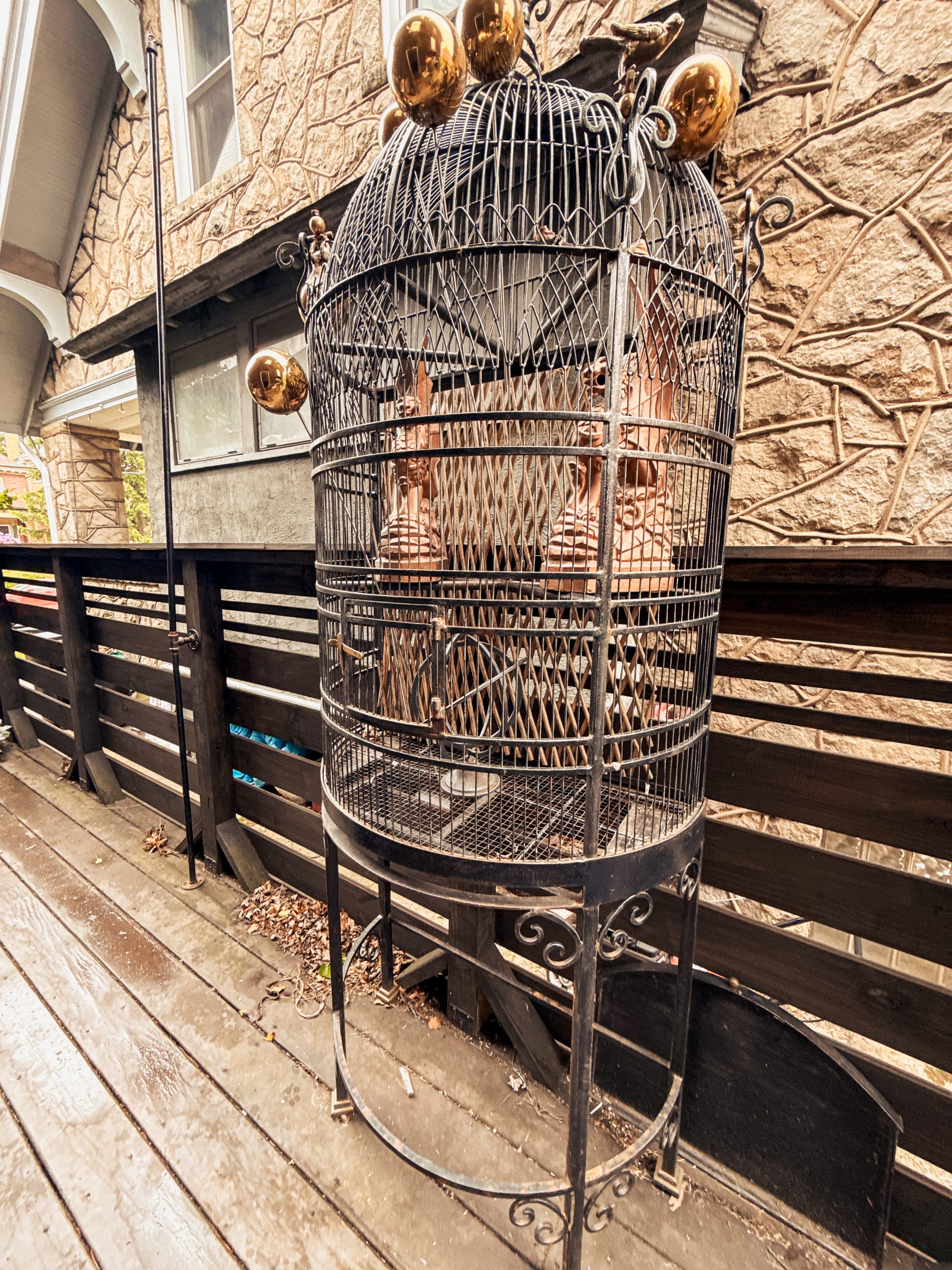
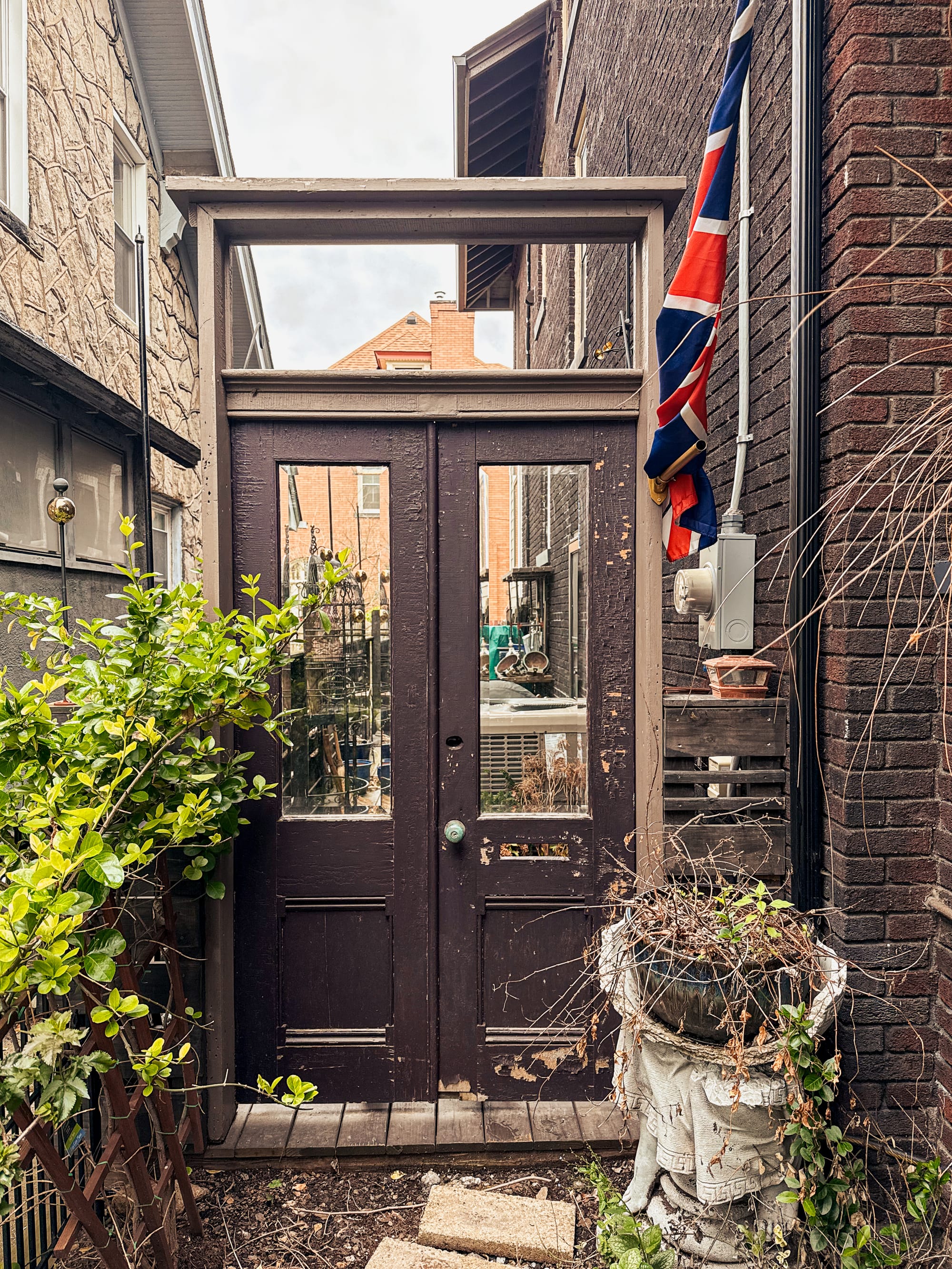
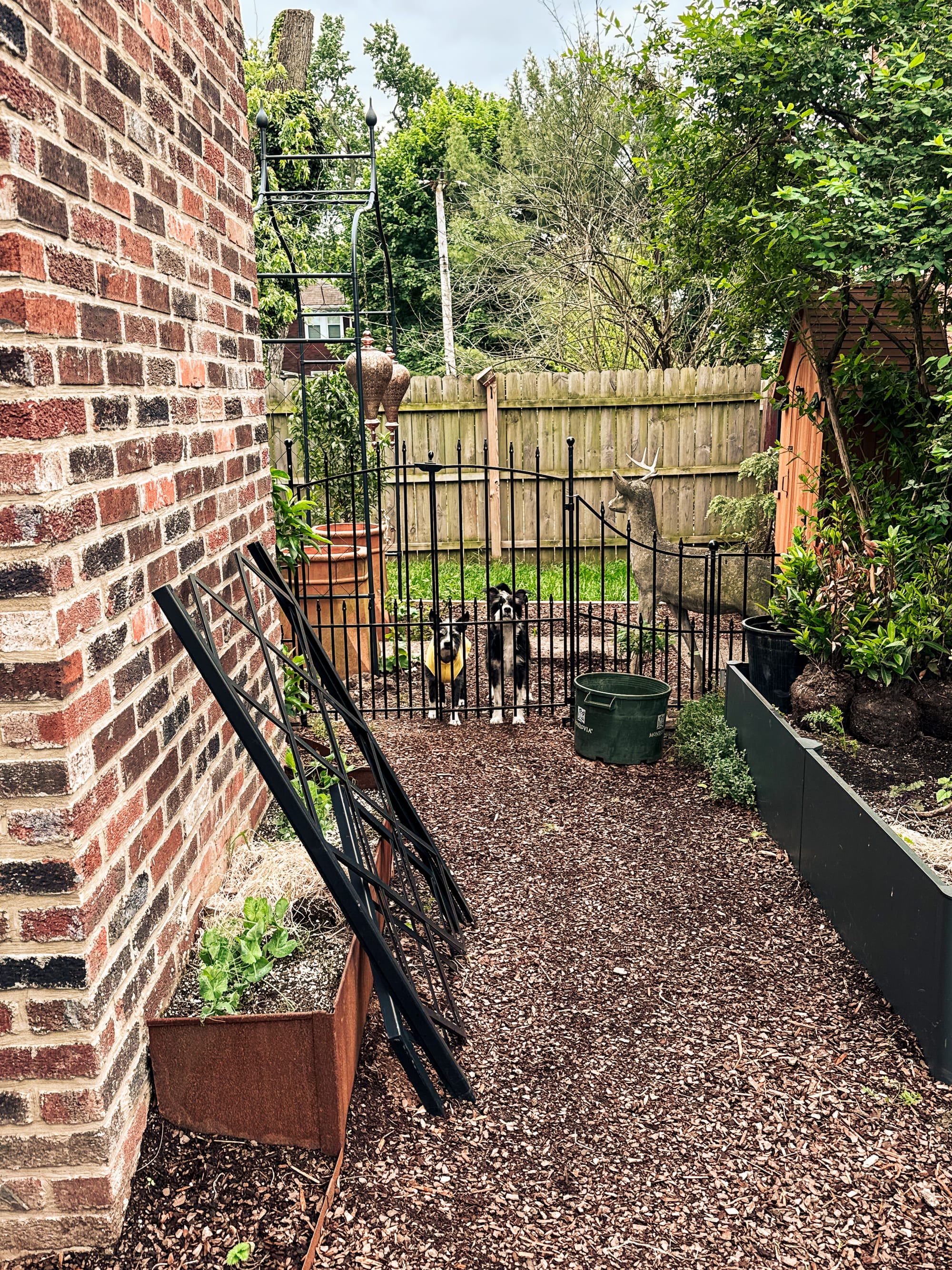
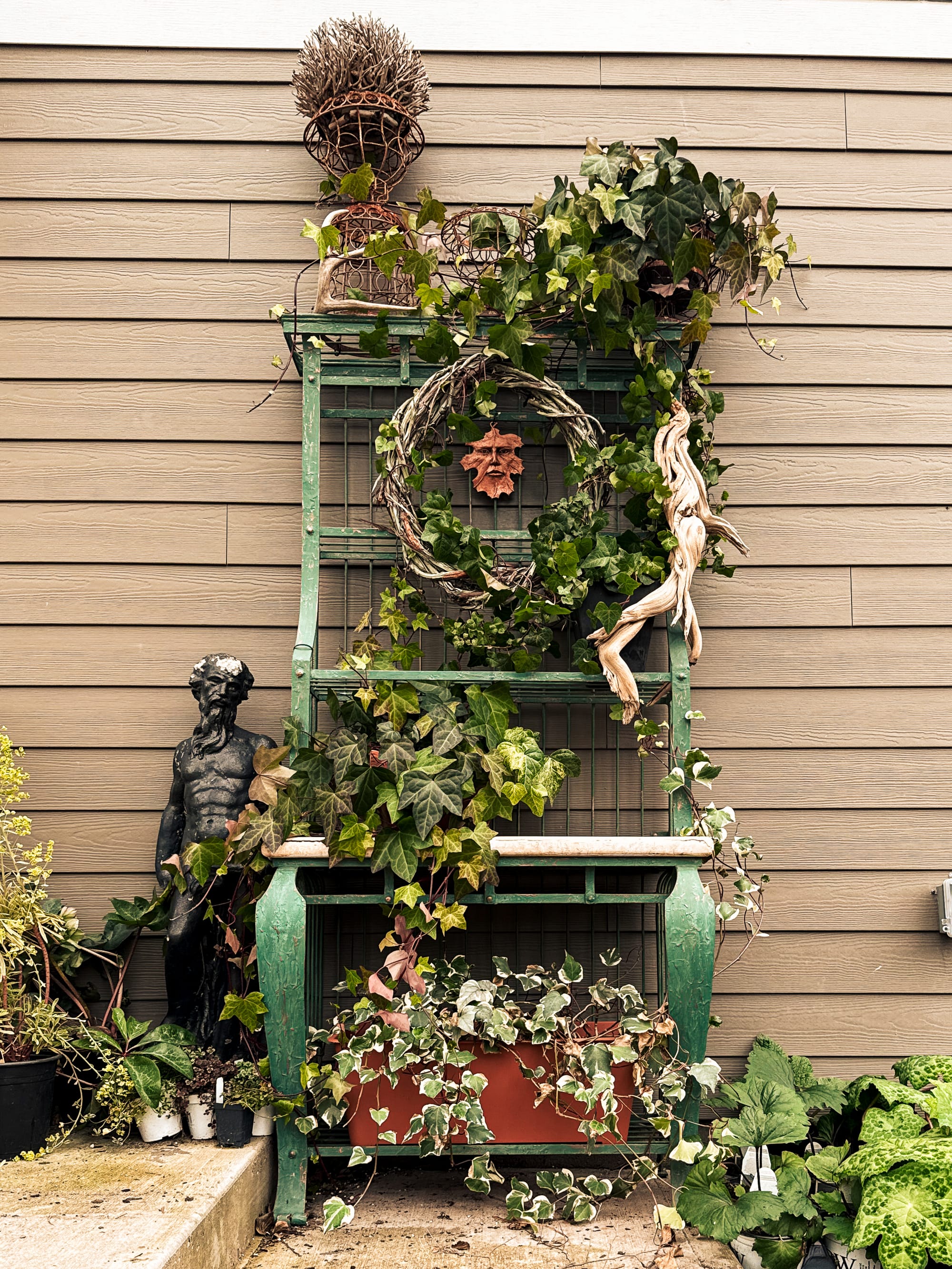
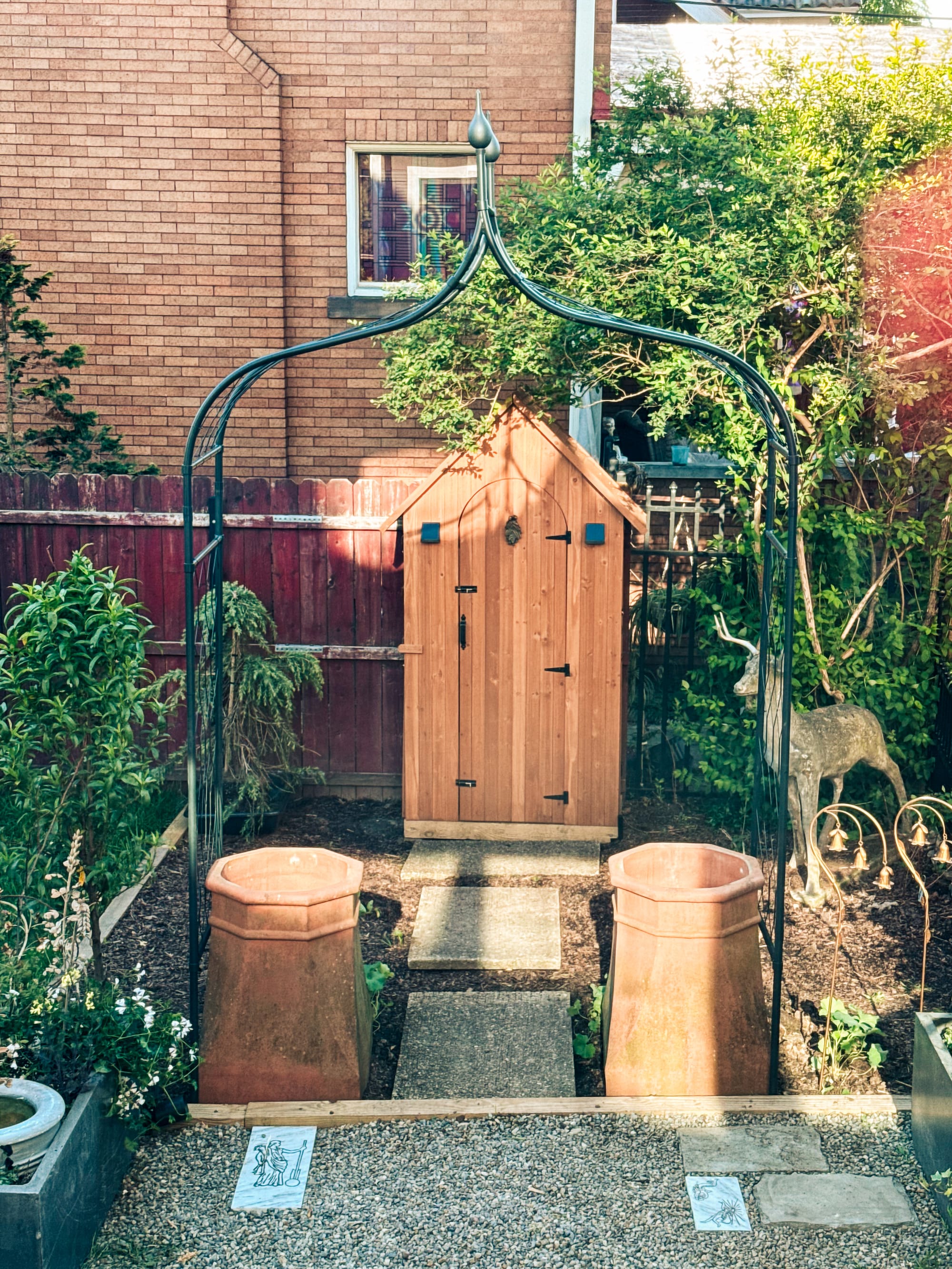
Divide the garden into rooms with clear purposes...
Break the challenge into smaller pieces. What are the activities your garden needs to support: a grill area, dining or lounge seating, an edible garden, a play area for children or pets. Start with those purposes and the space they require. Think of these like the rooms of a house and the garden becomes more easily understood as a series of potential walls, floors, and passageways.
...that relate to one another in a clear way...
Starting from those purposes and the rooms they require, you can begin to shuffle layout ideas around and think about how the spaces relate to one another, just as you think about the relationship of rooms in the house. Do you need to be able to see the children while you're grilling? The vegetables need the sunniest room. If there's a place to sit and read, you'll want a quiet corner. Consider the options and how you go from one space to the next.
...with sight lines, focal points, and reveals that connect them...
With room boundaries mapped, you begin to establish the walls—and even more importantly the openings in those walls. The walls might be plants (in a more formal hedge or a less formal border). They might be fences (on the exterior of the yard or more decorative boundaries within it) and the literal walls of the house. They might even be implied borders by a change from stone to grass to mulch, or a step down or up.
Focus on the doorways, the transitions from one room to the next. What do you see immediately? Each room should have an intentional focal point—maybe something related to its function like a dining table or fire ring, or maybe something more decorative like a fountain or a sculpture or a tree. Think about how these are progressively revealed as you move through the spaces. What can you see from the door, and what can you see only when you round the corner?
...with multiple layers of height.
So many of us start with yards that are a flat expanse of grass, maybe with a fence along the edge. Think about how you introduce variations of height, not just at the borders of the garden along literal fences and walls, but within the garden. Decorate walls like actual walls of the house, with furniture up against them and art hanging in the air. Use plants in planters and pots and structures that lift them up. And if you have the space, use trees or shrubs to build up the height as well, even if you buy them as small seedlings and grow them slowly over time—that growth and change, after all, is part of the delight of the garden.
This week's notes
The irises are open, and the baptisia is on the verge of blooming. The peonies are not quite, at least here at Broken Hearts Manor, but mom reports hers are open already. The berries from the market were good this week—certainly not Pennsylvania-grown just yet (Florida, I think), but they taste like real berries.
And with that, back to it. More gardening, and while it's still cool today, soon enough it will be hotter than we'd like.
Until next week,
The Farmer-General